

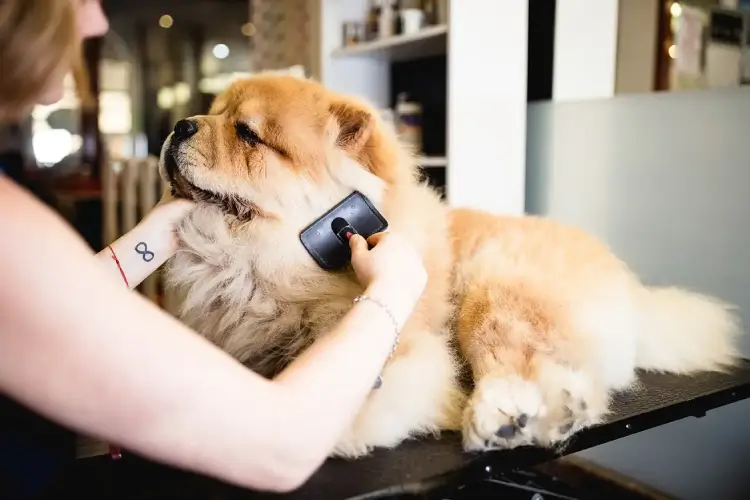
Regular grooming not only ensures that your pet’s coat stays in good condition, but it can also increase the bond between you and your pet.
A shiny, healthy coat is one of the clearest signs of a happy, well-cared-for pet, but it takes more than the occasional brush to keep it that way. Grooming plays its part, but what your dog or cat eats, how they’re protected from parasites, and even how they’re bathed all contribute to healthy skin and fur underneath.
We give some tips below on how nutrition, environmental factors and grooming can all help keep your pet looking their best.
Start young
If you have a puppy or kitten, it’s worth getting them used to being brushed as early as possible. Introduce a soft brush and use it daily, pairing each session with a few tasty treats so brushing becomes something they associate with good things, not something to tolerate.
Keep grooming positive
If you have a dog or cat who hates being groomed, you can train them to accept it. Use a soft brush and introduce brushing slowly. Brush gently over their back and then reward them with a small treat. Always brush in the same direction as the hair coat. The idea is to get them used to the brush initially and not to groom them. Build up the time and intensity until you can brush them effectively without them resenting it.
Train your dog to stand to be groomed
Dogs can be trained to stand up while you groom them by using positive reward based training. Use a treat and ask them to sit. Walk forward holding the treat in front of their nose and they should then stand. When they can do this reliably say “stand” as they stand up and reward them. When you can use the “stand” command to make them stand up, combine this with brushing, gradually building up the time that you brush them for.
Have a daily routine
Grooming your pet at the same time each day will ensure that your pet comes to expect being groomed. Brushing dogs after a walk is a good idea to rid them of mud and burrs which could matt in their coat. It also means that you will see any ticks that they may have been picked up on a walk. Brushing cats before you give them their food will help make sure that they start to look forward to being brushed.
Protect your pet from parasites
Repeated itching is often the first sign of flea or tick infestation, which can lead to visible patches of hair loss and reddened, irritated skin. These parasites are tiny (often the size of a poppy seed) so can be extremely hard to spot, but you might see them on their fur or if you use a flea comb.
Fleas may also cause skin allergies and can transmit other parasites, such as tapeworms, to your furry friend. Because worms can cause your dog or cat to become malnourished, they can also cause a dull, shabbier coat.
Bob Martin Clear and Clear Plus range of spot ons and tablet treatments will kill parasites like fleas, ticks and worms, while also protecting your home for up to 12 months by breaking the flea life cycle.
Give your pet nutritious food
A dog or cat’s coat is made up of around 95% protein, so a nutritious, protein-rich diet is the foundation of healthy fur. When choosing food, look for options built around quality, identifiable protein sources rather than fillers.
Fat matters too, and it’s worth understanding which type. Omega-6 fatty acids, found in most standard pet foods, support the skin’s natural barrier and help retain moisture. Omega-3 fatty acids play an equally important role, but work a little differently: they help manage inflammation in the skin, which is often what’s behind persistent itching, dryness or flakiness. Most commercial pet foods contain more omega-6 than omega-3, so even a good-quality diet can leave your pet a little short on the fatty acids most linked to coat condition specifically.
If you’ve already switched to a quality, nutritious food and you’re still noticing dry skin, dandruff or a dull coat, that’s usually a sign it’s worth talking to your vet about supplementation rather than changing diets again.
Omega-3 supplements
If diet alone hasn’t solved a dull coat or flaky skin, an omega-3 supplement is usually the next step. Bob Martin Dog Supplement Joint + Skin Care is built around salmon oil, one of the richest natural sources of the omega-3 fatty acids EPA and DHA, alongside added vitamin E to help protect skin cells from oxidative stress.
Given daily, salmon oil works by nourishing the skin from within, helping to reduce dryness and flaking, add shine, and support the health of individual hair follicles, which can also help reduce shedding.
This particular formula also includes glucosamine, chondroitin and green-lipped mussel to support joint health, which makes it a useful option if your dog is getting a little older and you’re noticing both a duller coat and the first signs of stiffness. The two often go hand in hand as dogs age, so a formula that addresses both can be a simpler daily routine than managing separate supplements. It’s a soft chew, so it’s easy to feed by hand or mixed into food, and it’s suitable for dogs from 3 months old.
As with any supplement, if your pet’s skin issues are severe, sudden, or accompanied by other symptoms like excessive scratching or hair loss, see your vet first. Skin problems can have a number of underlying causes, and a supplement works best once anything else has been ruled out.
Use specialist pet shampoos
The pH of your pet’s skin is not the same as human skin, so use a shampoo that is specially formulated for pets. Use a mild shampoo for routine bathing or one that has been formulated for puppies or dogs for a more sensitive skin type. If your dog has a tendency to roll in unsavoury things then you may need a deodorising shampoo. This will neutralise the bacteria causing the smell and leave your dog smelling fresh again without the need for several shampoos.
Make sure you dry your pet after shampooing
Pets will get cold quickly if they are not dried after shampooing, especially if they are small, old or have a thin coat. Using a hair dryer is great if your pet will tolerate it. Introduce hair dryers gradually and use treats to get your pet used to it. Always use the coolest setting so that you do not burn your pet.
Keep water out of eyes and ears
Most pets dislike getting water in their eyes and ears, and for good reason, it’s uncomfortable and can cause real problems if it happens repeatedly. Beyond the inevitable shake-off (usually aimed straight at you), water trapped in the ear canal that isn’t properly dried can lead to ear infections over time. A small piece of cotton wool placed gently in each ear before bathing is a simple way to prevent this, just remember to remove it afterwards.