


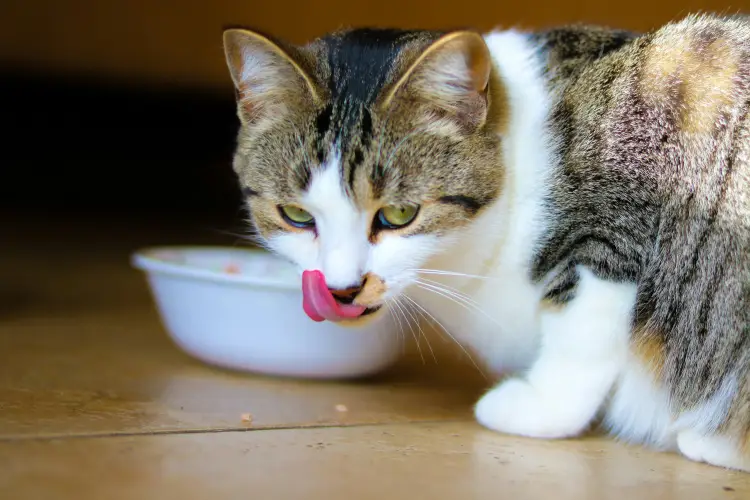
Most healthy cats eat a complete, balanced diet. However, aging, stress, and specific concerns with joints, skin and coat, or general vitality are all reasons a supplement can help, provided it’s chosen to match what’s actually going on.
Cats are also remarkably good at hiding when something’s wrong, which is exactly why so many owners miss the early signs their cat could use some extra support. So before looking at specific supplements, it’s worth understanding what they actually do and when they’re likely to help.
What are cat supplements?
Cat supplements are products designed to support specific areas of your cat’s health, alongside their everyday food rather than instead of it. They’re usually classified as a “complementary” feed, meaning they’re formulated to work alongside a complete diet, not replace one.
They typically fall into a few broad categories, each targeting a different area of wellbeing:
- Joint & movement – supporting mobility and cartilage health, particularly in older cats
- Calming & relaxing – supporting cats through stress, anxiety or environmental change
- Skin & coat – supporting skin health and coat condition
- Vitamins & vitality – supporting general wellbeing, appetite and energy
Supplements also come in different formats, and the format matters more than owners often expect. Tablets and capsules are common, but cats are notoriously reluctant to take tablets. Powders can be mixed into food, though fussy cats sometimes sniff them out and avoid their meal altogether. Lickable formats have become popular for exactly this reason: they’re designed to be palatable enough that a cat will take them willingly, without the stress of pilling or the guesswork of hiding something in food.
Supplements aren’t medication, and they’re not a substitute for veterinary diagnosis or treatment. A good supplement supports a cat that’s ageing, adjusting to change, or dealing with a specific, vet-recognised concern. It doesn’t fix an underlying health problem on its own, and it isn’t a replacement for a vet visit if something seems wrong.
How to Tell if Your Cat Could Use Some Extra Support
Mobility and stiffness – Signs of osteoarthritis in cats are far more subtle than in dogs, and lameness is one of the least reliable signs to look for. In one study of 28 cats with osteoarthritis, less than half limped, but almost three-quarters were reluctant to jump and two-thirds jumped a shorter distance than before. Watch instead for reduced jumping onto favourite spots, stiffness after resting, and less time spent on high perches. Around 60% of cats show signs of arthritis by age six, rising to as many as 90% by age 12
Stress and behaviour changes – Hiding more than usual, increased vocalisation, over-grooming, or a noticeable change in behaviour around visitors, travel or house moves can all point to a cat finding something stressful. These signs tend to cluster around specific triggers rather than showing up constantly.
Coat and skin condition – A dull or flaky coat, excessive shedding, or mild skin irritation are often the first visible signs that something’s slightly off, whether that’s diet, environment, or an underlying health change.
Appetite and general condition – A reduced appetite, lower energy, or a coat that’s lost its usual condition can all be early signs worth mentioning to your vet, particularly in senior cats or those recovering from illness.
None of these signs confirm a cause on their own, and several can overlap with other health conditions. If you notice one or more, especially if new or worsening, raise with your vet before choosing anything, so you know you’re addressing the right issue. If any sign appears suddenly, is severe, or is paired with things like vomiting, lethargy or a refusal to eat, contact your vet straightaway rather than trying a supplement first.
Why Format Matters: Lickable vs Tablet vs Powder
Once you’ve worked out what your cat might need, another question you may have is ‘which supplement should I buy?’ A supplement only helps if your cat will reliably take it.
| Format | Pros | Cons |
|---|---|---|
| Tablets & capsules | Concentrated dose, precise measuring | Many cats spit them out or hide them in a cheek; pilling can be stressful for both of you |
| Powders | Can be mixed into food, no pilling needed | Fussy cats often detect the change in smell or texture and avoid the bowl |
| Palatable enough to be taken willingly, straight from the sachet or as a food topper | Palatable enough to be taken willingly, straight from the sachet or as a food topper | Less concentrated per dose than a tablet, so consistency matters more than quantity |
Lickable formats tend to work best for anxious or stressed cats, where forcing a pill can undo the very thing you’re trying to support, and for older cats who may already find handling uncomfortable.
The best format is ultimately whichever one your cat will actually take consistently. A perfectly formulated supplement does nothing if it ends up abandoned at the bottom of the bowl.
Which Supplement Is Right for My Cat?
The right supplement depends on what you’ve noticed. Joint issues call for glucosamine and chondroitin, stress calls for alpha-casozepine, coat issues call for omega-3 and biotin, and general wellbeing calls for taurine and B-vitamins.
Joints and mobility
Vets most often turn to glucosamine and chondroitin for joint support, and the two work slightly differently. Glucosamine is a natural building block of cartilage, helping the body produce and repair the tissue that cushions joints. Chondroitin works alongside it by helping cartilage retain water for cushioning and by slowing the enzymes that break cartilage down over time. Used together, they support the joint from both ends, rebuilding what’s there while helping protect it from further wear. Omega-3 fatty acids from fish oil are also used to support mobility in cats with early osteoarthritis, working by helping to modulate inflammation in the joint. Green-lipped mussel, a marine ingredient naturally rich in its own omega-3s, is increasingly used alongside the two for broader support. Cats over seven, cats recovering from an injury, or any cat where you’ve noticed a change in how they move are the ones most likely to benefit.
Bob Martin Cat Supplement Joint & Movement combines glucosamine, chondroitin, green-lipped mussel and salmon oil in a daily lickable sachet, without the stress of tablets.
Stress and anxiety
Of the natural calming ingredients, alpha-casozepine (a milk-derived peptide) has the strongest cat-specific evidence. It’s made from milk protein, and it works gently on the brain’s calming pathways rather than sedating your cat. L-theanine, an amino acid found in green tea, works faster. It helps the brain settle into a relaxed state within about an hour, without making a cat drowsy or sleepy. Because of this, alpha-casozepine tends to suit ongoing stress, like a house move, while L-theanine suits a single stressful moment, like a trip to the vet.
Bob Martin Cat Supplement Calming & Relaxing combines alpha-casozepine with tryptophan and B-vitamins in a daily lickable sachet, ideal for cats who find tablets stressful.
Dull coat or flaky skin
Omega-3 and omega-6 fatty acids support skin cell health and can help reduce mild skin inflammation. Biotin supports keratin production, the protein that makes up a cat’s fur, helping reduce excessive shedding. Vitamins A and E are also commonly included in skin and coat formulations.
Bob Martin Cat Supplement Skin & Coat combines biotin, zinc and essential fatty acids in a daily lickable sachet designed to support skin barrier health and coat condition.
Energy and wellbeing
Taurine is vital here: cats can’t produce it themselves and rely entirely on their diet for heart and eye health. Vitamin B12 is sometimes vet-recommended to support digestion and metabolism in cats with reduced appetite, and B-complex vitamins more broadly support normal energy metabolism. This category tends to help most with reduced appetite, illness recovery, or general “not quite themselves” changes, particularly in senior cats.
Bob Martin Cat Supplement Vitamins & Vitality combines taurine, B-vitamins and vitamin E in a daily lickable sachet to support everyday wellbeing.
Common Cat Supplement Myths, Debunked
There’s a lot of confusion around cat supplements, much of it well-meaning but not quite accurate. Here’s where some of the most common beliefs stand up, and where they don’t.
| Myth | Fact |
|---|---|
| “Extra vitamins won’t hurt, even if my cat doesn’t need them.” | A cat-specific supplement, used at the correct dose, isn’t something to worry about. The real risk is using human vitamins, or exceeding the recommended amount over time, particularly with fat-soluble vitamins like A and D. Choosing one clearly labelled product and following the dosing guidance keeps this simple and safe. |
| “If my cat isn’t limping, they don’t have joint problems.” | Cats don’t really limp like people do. Instead, they’ll continue doing the same activities, just more slowly or with more hesitation, such as taking several attempts to jump onto the bed. Limping is one of the least reliable signs of feline arthritis. |
| “All calming supplements are basically the same, so it doesn’t matter which one I pick.” | Not quite. Calming products rely on completely different ingredients that act on the body in different ways, which is exactly why some owners find one product “does nothing” while another helps. For sudden events (travel, fireworks, a one-off vet visit), fast-acting options with L-theanine tend to work best. For ongoing stress (a house move, tension between cats), slower-acting options like milk protein supplements (alpha-casozepine) build up over one to two weeks to provide support. |
| “Supplements can replace vet care.” | Supplements support wellbeing but aren’t a substitute for diagnosing or treating an underlying condition. If a sign is new, sudden or getting worse, a vet visit comes first. |
Starting a Supplement Without Upsetting Your Cat’s Routine
Once you’ve picked the right supplement, how you introduce it matters just as much as what you’ve chosen. Cats are creatures of habit, and a sudden change, even a good one, can throw them off if it’s not handled gradually.
- Start small and build up. Rather than giving the full recommended amount straight away, ease in with a smaller portion for the first few days. This gives your cat’s system time to adjust and makes it easier to spot any reaction early.
- Introduce one supplement at a time. If your cat could benefit from more than one type of support, resist the urge to start everything at once. Space them a week or two apart, and if something doesn’t agree, you’ll know exactly which product is responsible.
- Make it part of the routine, not a battle. Lickable formats work well here, since they can be given straight from the sachet or as a topper on a small amount of food, ideally at the same time each day. Consistency beats precision, a cat that reliably takes a supplement daily will get more benefit than one given a “perfect” product inconsistently.
- Watch for any reaction. Mild, temporary digestive upset is the most common thing to look out for when introducing anything new. If you notice vomiting, diarrhoea, a loss of appetite, or anything that seems out of character, stop and speak to your vet.
- Be patient with results. Calming ingredients like alpha-casozepine build up over one to two weeks of daily use to show their full effect. Joint support tends to show benefit gradually over several weeks rather than overnight. Expecting an instant change can mean giving up on something that would have helped.
- When to check with your vet first. This matters most for kittens, senior cats, pregnant or nursing cats, and any cat with an existing health condition or on other medication, since a vet can confirm there’s no interaction or contraindication before you start. If your cat ever seems in significant pain, stops eating, or their condition is worsening quickly, don’t wait to try a supplement first, speak to your vet straightaway.
FAQs
Is it safe to give my cat vitamins made for humans?
No. Human vitamins are formulated and dosed for human bodies, not feline ones. Some ingredients that are safe for us, including certain amounts of vitamin D, can be toxic to cats even in small quantities. Always choose a product formulated specifically for cats.
What’s the clearest sign my cat needs a joint supplement specifically?
Reduced or hesitant jumping is one of the clearest early signs, often more reliable than limping, which many arthritic cats never show at all. Stiffness after resting and spending less time on high perches are also worth watching for, particularly in cats over seven.
Can kittens have supplements?
Most supplements are formulated for cats from 3 months old, but kittens have very different nutritional needs to adult cats and are usually getting everything they need from a complete kitten food. It’s best to check with your vet before giving a kitten anything beyond their normal diet.
Do lickable supplements work as well as tablets or powders?
The ingredients themselves work the same regardless of format. What differs is whether your cat will actually take it. Lickable formats are often more effective in practice simply because cats are more likely to take them willingly and consistently, compared with a tablet that gets spat out or a powder that gets sniffed out and avoided.
The Bottom Line
If you’ve recognised your cat hesitating before a jump, hiding more than usual, losing condition in their coat, or generally seeming “not quite themselves,” a supplement chosen to match that specific sign, in a format they’ll actually accept, can make a difference to their day-to-day comfort. Cats are quiet about discomfort, so noticing the small changes early, checking in with your vet and being consistent once you start is what actually helps, far more than any single ingredient.