


By nature, cats are very secretive, so it can be tricky to tell when they’re feeling a bit down in the dumps.
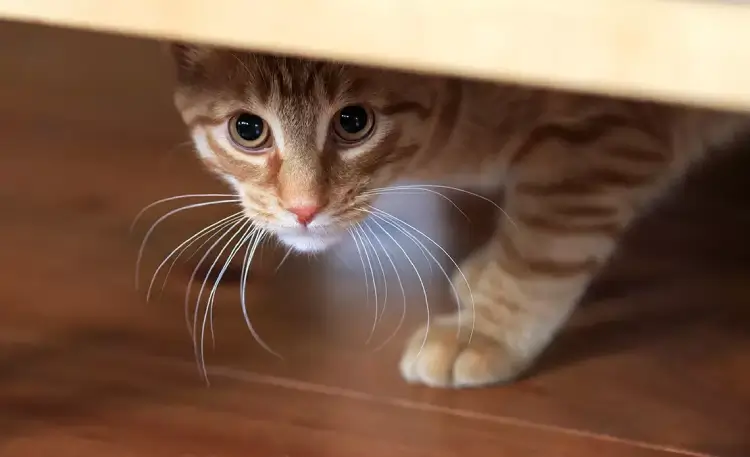
By nature, cats are secretive creatures. In the wild, showing vulnerability makes them a target, so even our most pampered house cats have held onto that instinct, which means it can be genuinely tricky to tell when they’re feeling anxious or unsettled.
Just like us, cats can be sensitive to their environment, routine and the way people interact with them. The good news is that once you know what to look for, the signs are there. Here’s our expert guide to recognising cat stress, understanding what triggers it, and the practical steps, including when a calming supplement can help, that can help your cat feel more settled.
Types of stress in cats
All cats are different. Some are naturally more laid-back, while others are prone to anxiety, and this can come down to a mix of environmental and genetic factors. Broadly, stress in cats falls into two categories: acute and chronic.
Acute stress
Acute stress in cats is relatively easy to recognise. It’s often caused by a situation the animal perceives to be threatening, such as a trip to the vets.
Symptoms of acute stress include:
- Crouching and not moving
- Holding the tail close to the body
- Wide eyes with dilated pupils
- Ears flattened to the head
- Yowling or growling
- Drooling
- Involuntary urination or defecation
- Aggression
Chronic stress
Chronic stress is harder to spot because it develops gradually, often as a result of an ongoing issue with a cat’s environment, another cat in the household, or even their relationship with their owner. Left unaddressed, it can lead to behavioural or medical problems over time.
Symptoms of chronic stress include:
- Hiding under or behind furniture
- Soiling or wetting in the house
- Spending more time hiding or resting than interacting
- Refusing to eat, groom, or use the litter tray
- Defensive aggression
- Excessive grooming, particularly of the tummy area
- Jumping at small noises
Causes of stress in cats
Like humans, cats are individual and unique, so while there are some common causes for their stress, there is no limit to the potential triggers.
Some examples of common stress triggers are:
- Loud noises, such as fireworks and thunderstorms
- The addition of a new pet to the family
- Moving home
- Changes to routine or schedule
- Flea infestations
- Boredom
- Car journeys
- Being left home alone
- Remodelling or furniture arrangement
- Limits in resources such as food, litter, water
Understanding what’s behind your cat’s stress is the first step to helping them. A cat who’s anxious because of a new arrival in the house needs a different approach to one who’s stressed by an underlying flea problem, so it’s worth thinking about what’s changed recently before deciding how to help.
How stress affects the health of cats
Stress doesn’t just affect your cat’s mood, it affects their physical health too. Veterinary research has shown that stress can cause otherwise healthy cats to vomit, urinate or defecate away from the litter tray, and experience a noticeable drop in energy or appetite.
In some cases, prolonged stress can contribute to genuine medical conditions. Feline idiopathic cystitis, a painful bladder condition, is one of the clearest examples of a physical illness that stress can directly trigger. Signs to watch for include straining to urinate, blood or discolouration in the urine, frequent trips to the litter tray, and, in severe cases, an inability to urinate at all. If your cat shows any of these signs, contact your vet as soon as possible.
This connection between emotional and physical health is exactly why managing stress isn’t just about keeping your cat happy day to day. It’s a genuine part of protecting their long-term wellbeing.
Creating a stress-free home
Small changes to your cat’s environment can make a real difference to how settled they feel. Here’s where to start.
Control access through the cat flap. Cats are territorial, and another cat coming through the flap to eat their food or wander into their space can be genuinely stressful. A microchip-activated cat flap solves this in most cases, or you can remove the flap altogether if it’s a persistent issue.
Experiment with water sources. Cats can be surprisingly fussy about water. Some dislike the smell of chlorine in tap water, while others will only drink water that’s moving. Try different bowls and locations, and if your cat seems to prefer the tap, a pet water fountain is often a good investment.
Think about their food bowl too. Some cats won’t eat from plastic because of the smell it retains, while others prefer metal or ceramic. It’s worth testing a few options. And keep food well away from the litter tray. Understandably, cats don’t like eating where they go to the toilet.
Provide high-level resting spots. Cats feel safer when they can observe their surroundings from height. If your cat is older or arthritic, make sure any elevated spots are still easy and safe for them to reach, with steps or ramps if needed.
Get the litter tray setup right. As a general rule, provide one litter tray per cat plus one extra, placed in a quiet, discreet spot away from food and busy areas. Clean trays daily, since cats are far less likely to use a tray that isn’t kept fresh.
Add a scratching post. Most cats prefer to stretch upright to scratch, so a tall, sturdy post works best.
Keep life interesting, but predictable. Rotating toys, offering cardboard boxes, or growing some kitty grass can prevent boredom, especially for indoor cats. At the same time, cats thrive on routine, so try to keep feeding times, play sessions and their general environment as consistent as possible.
Can supplements help with cat stress?
Environmental changes are always the starting point for managing cat stress, but for cats who struggle with specific triggers, such as vet visits, travel, fireworks, or a house move, or those who seem generally more anxious day to day, a calming supplement can offer useful extra support.
The ingredient with the strongest evidence behind it is alpha-casozepine, a natural peptide derived from milk protein. It works by interacting with GABA receptors in the brain, the same neurotransmitter pathway involved in regulating calmness and reducing over-excitability. Unlike sedatives, it isn’t designed to make your cat drowsy. The aim is to take the edge off anxiety while your cat stays fully themselves.
Bob Martin Cat Supplement Calming & Anxiety combines alpha-casozepine with L-tryptophan, an amino acid involved in serotonin production, and B-complex vitamins to support normal nervous system function. It comes as a lickable sachet, which tends to work well for cats who find tablets stressful in themselves, and it can be fed daily for ongoing anxiety or an event such as a vet appointment or fireworks night.
It’s worth being clear about what a calming supplement can and can’t do. It’s not a substitute for addressing the underlying cause of your cat’s stress, whether that’s a resource conflict with another cat, an unsuitable litter tray setup, or a change in routine. Think of it as one part of a wider plan, working alongside the environmental changes above, rather than a fix on its own. If your cat’s stress is severe, persistent or affecting their physical health, speak to your vet, as they may recommend a broader behavioural plan.